





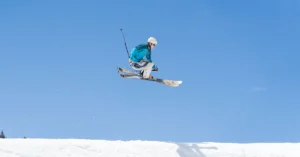
If you’ve ever watched ski jumping, you’ve probably asked yourself one question. How are they staying in the air for so long?
A skier races down a steep hill, launches into the sky, and then seems to float over the snow. For a few seconds, it almost looks impossible.
But there isn’t any magic involved. Ski jumpers use speed, body position, and physics to stay in the air longer than most people think is possible. What makes it even more impressive is that every jump lasts only a few seconds, yet athletes spend years learning how to do it properly.
The smallest mistake can ruin a jump. A tiny improvement can add several extra meters. So how is it possible for ski jumpers to stay in the air so long and how do they train for that? Let’s break it down in simple terms.
Ski Jumpers Don’t Actually Fly
This is the first thing most people get wrong. Ski jumpers aren’t flying the way birds or airplanes fly. The moment they leave the ramp, gravity starts pulling them down.
The difference is that they know how to use the air around them. Think about putting your hand outside a moving car window. When you tilt your hand, the air pushes against it. Sometimes you can even feel your hand lift upward.
A ski jumper does something similar. Their body and skis work together to catch air and create lift. Lift doesn’t stop gravity.
It simply slows the fall. That’s why jumpers appear to float instead of dropping straight down.
Speed Makes Everything Possible
Without speed, ski jumping wouldn’t exist. Before takeoff, athletes race down a steep track at speeds close to 100 kilometers per hour.
That’s fast enough to create a powerful flow of air around their body.
- That moving air is what creates lift.
- No speed means no lift.
- No lift means a very short jump.
- This is why athletes spend so much time working on their approach down the hill.
- Everything starts there.
The V Shape Changed the Sport
Take a look at modern ski jumpers. You’ll notice their skis form a wide V shape during flight.
That wasn’t always the case. Years ago, athletes kept their skis parallel. Then a few jumpers started experimenting with spreading the tips apart.
At first it looked strange. Some people thought it was a bad idea. Then those athletes started jumping farther than everyone else.
The reason was simple. The V shape allowed them to catch more air, More air created more lift, More lift meant longer jumps. Today almost every professional ski jumper uses this technique.
Body Position Is Everything
Strong legs help, Good equipment helps. But body position is one of the biggest factors in ski jumping.
After takeoff, athletes lean forward and stay as close to their skis as possible. They try to create a smooth shape for the air to flow around.
Even a small mistake can hurt performance.
- A slight head movement.
- A shoulder that’s too high.
- A body angle that’s slightly off.
- All of these things can reduce lift.
That’s why ski jumpers spend years practicing movements that look almost identical to casual viewers.
Why Long Jumps Look So Easy
Here’s something funny about elite sports. The better someone gets, the easier it looks. Ski jumping is a perfect example.
When you watch top athletes, everything seems smooth. The takeoff looks effortless. The flight looks relaxed.
The landing looks controlled. What you don’t see are the thousands of practice sessions behind those few seconds.
The best jumpers make difficult things look simple. That’s one reason the sport is so impressive.
How Ski Jumpers Train
Now let’s look at the second part of the question. How do they train for this? The answer is simple. They train almost everything.
- Strength.
- Balance.
- Timing.
- Coordination.
- Technique.
- Mental focus.
- Every area matters.
Building Leg Power
The takeoff happens very quickly. Athletes only have a brief moment to push off the ramp.
That means they need strong and explosive legs. Many ski jumpers spend time doing exercises like:
- Squats
- Lunges
- Step ups
- Leg presses
- Single leg drills
The goal isn’t to build huge muscles. Extra weight can actually hurt performance. Instead, athletes focus on strength without adding unnecessary mass.
Jump Training
Power isn’t enough by itself. Athletes also need explosive movement. That’s where jump training comes in.
Many ski jumpers do:
- Box jumps
- Vertical jumps
- Bounding exercises
- Jump squats
These drills teach the body to produce force quickly. That’s exactly what happens during takeoff. The stronger and faster the movement, the better the launch.
Balance Training
Imagine standing on two narrow skis while moving close to 100 kilometers per hour. Now imagine staying stable while flying through the air.
Balance becomes pretty important. That’s why ski jumpers spend a lot of time improving stability.
Common exercises include:
- Balance boards
- Stability balls
- Single leg exercises
- Coordination drills
These activities help athletes stay in control during every stage of the jump.
Summer Training Is a Big Surprise
Many people assume ski jumpers only train during winter. Not true, Most athletes train all year. Many ski jumping centers have special plastic surfaces instead of snow.
Water is sprayed onto the surface so skis can slide smoothly. The experience is surprisingly similar to winter jumping.
This allows athletes to keep practicing even during warmer months. And that’s important because technique requires constant repetition.
Wind Can Change Everything
Not every jump happens under the same conditions. Wind plays a huge role. A headwind can help a jumper stay in the air longer.
A tailwind can shorten a jump. Sometimes the difference is significant. That’s why officials constantly monitor weather conditions during competitions.
Even the best athlete has to adjust when the wind changes. Learning how to react to different conditions is part of becoming a great ski jumper.
Equipment Makes a Difference Too
Talent matters most. But equipment still plays an important role. Every piece of gear is carefully designed.
This includes:
- Skis: Long skis help generate lift and improve stability.
- Ski Suits: Suits are designed to work with airflow while following competition rules.
- Boots: Boots help athletes maintain the right body position.
- Helmets: Helmets protect athletes during training and competition.
Are Ski Jumpers Afraid?
The honest answer is yes. Most athletes feel fear at some point. That’s completely normal. The difference is that experienced jumpers learn how to manage it.
Confidence comes from preparation. When you’ve practiced thousands of times, you trust your skills. Fear doesn’t disappear completely.
Athletes simply learn how to perform despite it.
What Makes Elite Ski Jumpers Different?
Elite ski jumpers combine several qualities at once.
They have:
- Excellent balance
- Strong legs
- Quick reactions
- Good timing
- Mental toughness
- Consistent technique
Most importantly, they repeat the basics extremely well. That’s often what separates champions from everyone else.
The Landing Is Harder Than It Looks
Many viewers focus on the flight. The landing deserves attention too. Landing after a long jump requires precision.
Athletes must absorb impact while staying balanced. A poor landing can affect scores even after a great flight. That’s why jumpers spend a lot of time practicing this part of the jump. A strong finish matters.
Why People Love Watching Ski Jumping
There’s something unique about ski jumping.
- Part of it is the speed.
- Part of it is the height.
- Part of it is the risk.
But there’s also something beautiful about watching a person work with nature instead of against it.
The athlete isn’t fighting gravity. They’re using physics, timing, and skill to stay in the air as long as possible. When everything comes together, the result is amazing to watch.
FAQs
How long do ski jumpers stay in the air?
Most jumps last several seconds. Longer jumps can keep athletes airborne for around five to ten seconds depending on the hill and conditions.
How fast are ski jumpers before takeoff?
Many elite athletes reach speeds close to 90 to 100 kilometers per hour before leaving the ramp.
Why do ski jumpers spread their skis apart?
The V shape helps create more lift, allowing jumpers to stay in the air longer and travel farther.
Do ski jumpers train all year?
Yes. Professional athletes train throughout the year using strength workouts, technical practice, summer jumps, and mental training.
Is ski jumping dangerous?
Like any high speed sport, ski jumping carries risks. However, modern equipment, training methods, and safety rules have made the sport much safer than it was in the past.
Do ski jumpers need to be very strong?
Yes, but they don’t need huge muscles. They focus on explosive power, balance, and body control rather than size.
Conclusion
So, how is it possible for ski jumpers to stay in the air so long and how do they train for that?
The answer comes down to physics and practice. Athletes use speed to create airflow. Their body position and skis generate lift. That lift slows their descent and allows them to travel incredible distances through the air.
But none of it happens by accident. Behind every jump are years of training, countless practice sessions, strength work, balance drills, and mental preparation.
The next time you watch a ski jumper glide across the sky, you’ll know what’s really happening. It isn’t magic. It’s skill, science, and a lot of hard work packed into a few unforgettable seconds.
Also Read: